
Academic Insight Talks
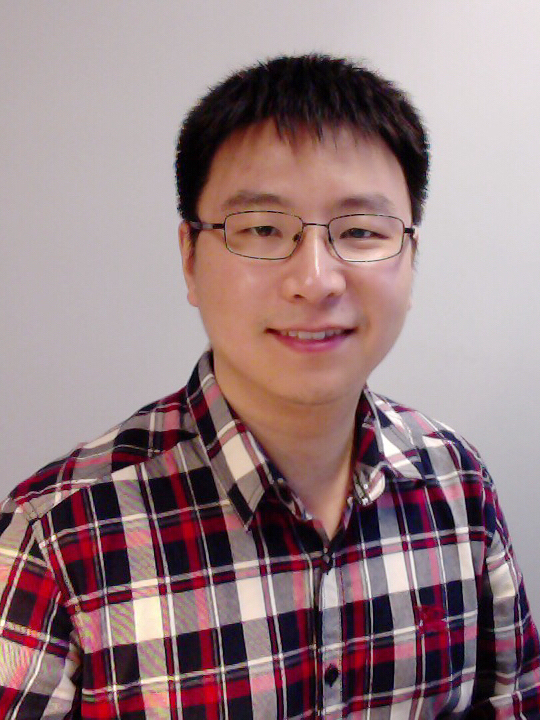
Wei Wang
Associate Professor, The Hong Kong University of Science and Technology
Talk Title:
Taming the Long Tail: Infrastructure for RL Post-Training of Large Language Models
Abstract: Reinforcement learning (RL) post-training has become the core engine that turns large language models into reasoners and agents — and it is rapidly becoming a dominant workload in AI infrastructure. Unlike pre-training, which consists of a uniform stream of dense computation, RL post-training is a stochastic, multi-stage pipeline whose defining pathology is the long tail: a few straggler responses, trajectories, or environment interactions leave massive GPU fleets idle under the synchronization requirements that on-policy learning demands. This talk presents a line of systems that reclaim this wasted capacity at successively wider scopes without compromising learning quality. Within a single job, stragglers can be effectively mitigated by reordering long rollouts while remaining strictly on-policy. Across RL jobs in shared clusters, co-scheduling opportunities arise: jobs with complementary rollout and training phases can be co-scheduled so that one job's idle phase runs another's active phase. When it comes to agentic RL, disaggregating the pipeline over heterogeneous hardware and scheduling at trajectory granularity eliminates environment stragglers and scales production training beyond thousands of GPUs. Throughout, one lesson stands out: long-tail stragglers are inevitable, but idle GPUs are not — exploit the freedoms hidden inside algorithmic contracts, and every bubble becomes useful work.
Speaker Bio: Wei Wang received his Ph.D. degree in Electrical and Computer Engineering from the University of Toronto in 2015. In the same year, he joined the Department of Computer Science and Engineering at the Hong Kong University of Science and Technology (HKUST), where he is currently an Associate Professor. Dr. Wang’s research interests encompass distributed and cloud systems, with a recent focus on machine learning systems, AI infrastructure, and large-scale cluster management for AI workloads. He has published over 100 peer-reviewed papers in leading conferences and journals. His work has been recognized with Best Paper Awards at NSDI 2026, EuroSys 2025 and SoCC 2023. He currently serves as an Associate Editor of IEEE Transactions on Parallel and Distributed Systems.
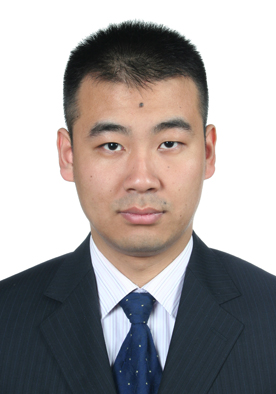
Wenfei Wu
Assistant Professor, Peking University
Talk Title:
From Prototypes to Protocols: Building the Ecosystem for In-Network Computing
Abstract: A decade of research has laid the mechanistic foundation for In-Network Computing (INC): protocols that perform AllReduce-style aggregation on switches with delivery and computation correctness (ATP, NetReduce, ASK), cluster-wide management that schedules scarce switch memory among concurrent jobs, and adaptation frameworks (NetRPC, ClickINC) that port diverse INC applications across heterogeneous platforms. These building blocks answer the question "can the network compute?" decisively — yet INC still lives mostly in prototypes. This talk argues that the next frontier is not another mechanism but an ecosystem. Turning INC into infrastructure requires protocols that vendors, operators, and applications can all commit to. We present EPIC (SIGCOMM'26), an in-network collective protocol specification for the open Ethernet ecosystem, built on the principle of "unified abstraction, polymorphic realization" and developed with the ETH+ consortium: a standard-compatible abstraction fixes the functional boundaries, formal verification proves every polymorphic mode correct, and a modular design gives vendors an evolutionary adoption path. Realization then follows two hardware routes: direct ASIC integration offers the highest performance, while programmable switches offer flexibility and fast iteration. We demonstrate the reach of the programmable route with Turbo (SIGCOMM'26), which offloads attention scaling-reduce for long-context LLM inference onto Tofino2 switches — well beyond simple summation — reducing decoding latency by up to 37%. Together, EPIC and Turbo sketch how INC moves from point solutions to an open, evolvable ecosystem.
Speaker Bio:Wenfei Wu is an assistant professor at the School of Computer Science, Peking University. He received his Ph.D. from the University of Wisconsin–Madison. His research spans computer networks and distributed systems, with a focus on in-network computing: he developed foundational methodologies in INC protocol design, cluster-level job management, and cross-platform development, and initiated the ETH+ consortium to standardize in-network collectives on Ethernet. His work received the USENIX NSDI'21 Best Paper Award, and the ACM ASPLOS'23 Distinguished Paper Award. His recent systems EPIC and Turbo appear in ACM SIGCOMM 2026.
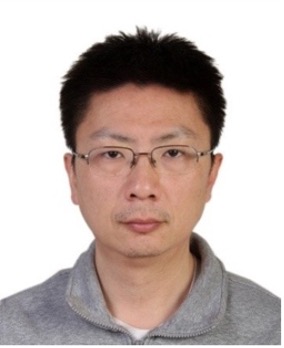
Yang Xu
Professor, Fudan University
Talk Title:
AI Data Center Networks: Traffic Characteristics, Technical Challenges, and System Optimization
Abstract: With the rapid growth in the scale of large-model training and inference, AI data center networks are facing new traffic patterns and performance challenges that differ significantly from those in traditional data centers. AI workloads typically demand both high bandwidth and low latency, while their communication patterns exhibit strong periodicity, high burstiness, and phase-level synchronization. Meanwhile, multiple types of traffic—including distributed training, online inference, storage access, and parameter synchronization—often coexist within the same network. Their interactions can lead to network congestion, traffic imbalance, and performance interference, ultimately reducing GPU utilization, increasing job completion time, and degrading the quality of online services. To address these challenges, AI data center networks must evolve beyond general-purpose traffic forwarding toward specialized designs that account for AI communication patterns and workload-specific performance objectives. This talk will summarize the key traffic characteristics and technical challenges of AI data center networks. It will also present our recent research on traffic prediction, buffer management, traffic isolation, and traffic scheduling. Finally, the talk will discuss how to build next-generation AI data center networks that deliver high throughput, low latency, predictable performance, and strong isolation, thereby providing efficient and scalable network support for large-scale AI systems.
Speaker Bio: Yang Xu is the Yaoshihua Chair Professor in the College of Computing Science and Artificial Intelligence at Fudan University. He received his Ph.D. from Tsinghua University in 2007. His research interests include AI systems, data center networks, and programmable networks. He has published more than 150 papers in leading international conferences and journals, including SIGCOMM, NSDI, SIGMETRICS, EuroSys, TON, JSAC, INFOCOM, ICNP, and CoNEXT. He also holds more than 10 U.S. and international patents in various areas of networking and computing. He served as TPC Co-Chair of IWQoS 2026, General Co-Chair of APNET 2025 and Vice General Co-Chair of APNET 2024, and has been a TPC member for numerous international conferences. He is an Editor for JNCA, and has served as a Guest Editor for JSAC, SCN, and Science China Information Sciences. His work has received several recognitions, including the Best Paper Award at ACM CoNEXT 2022 and Best Paper Nominee honors at ACM ICPP 2023 and IWQoS 2024.
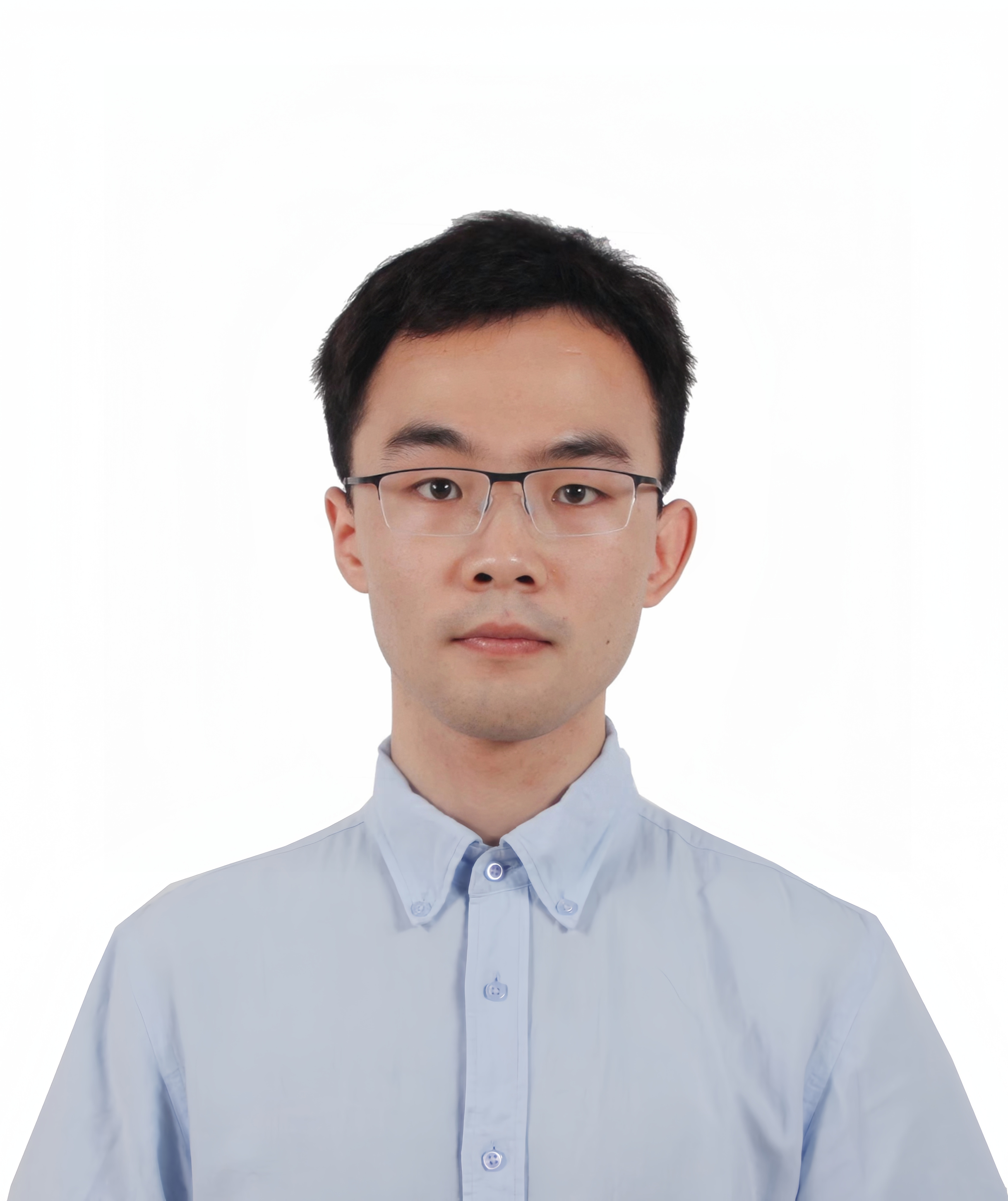
Mingxing Zhang
Associate Professor, Tsinghua University.
Talk Title:
How Can We Reduce Token Costs in the Agent Era?
Abstract: Large language model applications are evolving from single-turn question answering to complex multi-turn agentic reasoning. A single task is no longer just one model generation, but instead involves multiple model invocations, extensive context reads and writes, tool interactions, and continuous state maintenance. This trend is driving rapid growth in token consumption and making inference cost a central challenge for scaling agent applications. This talk focuses on "how to reduce token costs" and presents a whole-system heterogeneous collaboration approach. In the cloud, the Mooncake architecture enables KVCache-centric disaggregated inference. At the edge, the KTransformers framework maps different parts of a model onto the most suitable heterogeneous hardware. During agent execution, environment reuse reduces the overhead of repeated initialization and state management. Together, these techniques improve compute utilization, lower inference costs, and help AI infrastructure evolve toward more efficient and broadly accessible intelligent services.
Speaker Bio: The speaker is an Associate Professor at Tsinghua University whose research focuses on memory systems. He is the initiator of the open-source projects Mooncake and KTransformers. His work has been published in leading international conferences and journals, including OSDI, SOSP, ASPLOS, HPCA, and EuroSys, with more than 40 papers in total. His research has received several distinctions, including a FAST Best Paper Award, a SIGSOFT Distinguished Paper Award, and the first OSDI paper from a university in mainland China. He has also received the ChinaSys Rising Star Award, the ChinaSys Distinguished Doctoral Dissertation Award, and the IEEE TCSC Outstanding Ph.D. Dissertation Award. He has been selected for the Ministry of Education's U40 Program and the China Association for Science and Technology's Young Talent Support Program, and has served as a project lead for a National Key R&D Program of China. Previously, he served as Chief Algorithm Technology Expert and Director of the Innovation Research Institute at Sangfor Technologies, where the incubated products were deployed by tens of thousands of customers.


